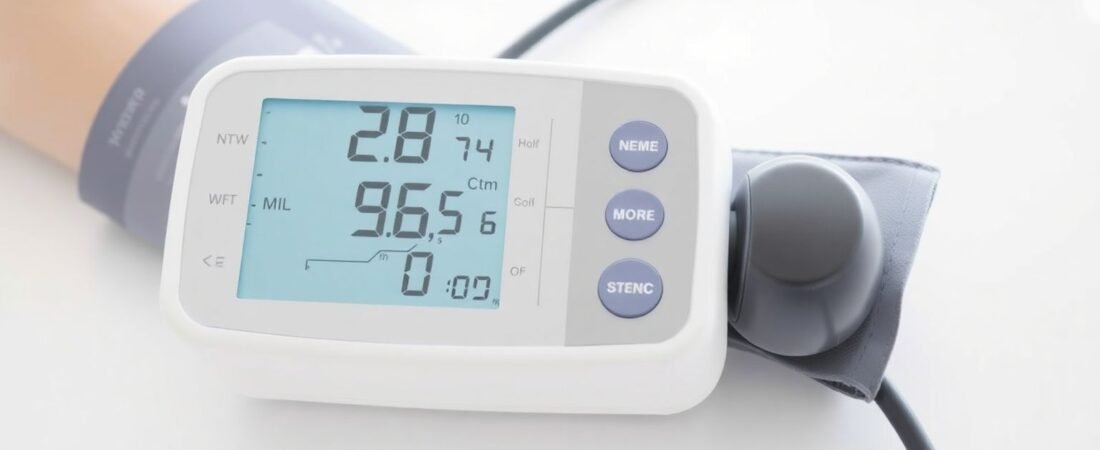
Thanks for checking out my article on the Best Home BP Monitors 2025. You’ve been keeping track of your blood pressure at home for months now, diligently recording numbers morning and evening. Your doctor is pleased with your dedication.
But studies suggest there’s approximately a one-in-five chance your watch may be giving you inaccurate readings, even if you bought a reputable, validated brand.
That’s unsettling to consider. You probably spent time researching, reading reviews, and choosing what seemed like the perfect device.
Yet research has indicated a troubling reality: laboratory validation doesn’t guarantee real-world accuracy for your specific situation.
Factors like your arm size, measurement technique, and even subtle device variations can throw off readings significantly.
Want to make sure you’re getting accurate blood pressure measurements at home? In this article, you’ll explore which watches reportedly perform well in real-world conditions, what features genuinely matter beyond marketing hype, and how to verify your device is working correctly for you specifically.
Why Accuracy Isn’t What You Think It Is
When you’re shopping for a home blood pressure watch, the natural assumption is that buying a “validated” device from a trusted brand guarantees accurate readings. The reality is far more nuanced and honestly pretty concerning.
Testing of 152 home blood pressure devices reportedly revealed that approximately 55.9% passed agreement testing on the initial assessment. Even more alarming, when you restrict the analysis to just validated brands, approximately 22.4% still failed. These are devices that underwent rigorous laboratory testing and earned clinical validation stamps.
The disconnect happens because laboratory validation and real-world performance are fundamentally different things. In controlled studies, trained personnel use the devices on volunteers under ideal conditions.
At home, you’re measuring your own blood pressure, possibly with suboptimal technique, on your unique body, in varying environmental conditions.
The device that worked perfectly in the lab might struggle with your arm circumference, tissue composition, or the way you position the cuff.
What really threw me when I first encountered this data was the diastolic blind spot. Among devices that accurately measured systolic pressure (that top number everyone focuses on), approximately 14.4% had diastolic differences exceeding 10 mmHg.
You could think you’ve got great data on your blood pressure when you’re actually missing critical information about your cardiovascular health.
The algorithms manufacturers use to convert pressure oscillations into blood pressure readings vary considerably. Each company has proprietary calculations, and some algorithms may perform better with certain body types, arm sizes, or physiological conditions.
This explains why device-patient compatibility matters so much and why a watch that works perfectly for one person might struggle with another.
The Monitors That Actually Deliver
Despite the accuracy challenges, certain watches have reportedly performed well in both laboratory and real-world testing. Understanding what sets them apart helps you make a genuinely informed choice.
Oxiline Pressure XS Pro
This watch distinguished itself with embedded VIBRA TX Sensor technology that detects body motion during measurement. Movement is one of the most common sources of error in home monitoring, yet most devices have no way of knowing when you’ve fidgeted or shifted position.
The Oxiline displays a warning symbol when motion is detected, letting you know that particular reading might be unreliable.
The Bluetooth connectivity pairs with an app offering unlimited cloud storage, which matters more than it might initially seem. Most watches store 60-120 readings before older data gets overwritten.
If you’re measuring twice daily, that’s only a month or two of history.
Unlimited storage means you can track long-term trends, identify seasonal patterns, and share comprehensive data with your healthcare provider without worrying about lost information.
The device accommodates arm circumferences from 8.7 to 16.5 inches, which is standard across quality monitors. If your arm falls outside this range, you’ll need to purchase a separate cuff, but that’s true for virtually every home watch on the market.
Omron 3 Series
The Omron 3 Series starts at $70, yet testing reportedly revealed its accuracy matches devices costing over $150. Consumer Reports has indicated this finding, giving it top marks alongside premium models.
The conventional wisdom that you need to spend more for better accuracy simply doesn’t hold up under scrutiny.
The Omron 3 Series includes Bluetooth connectivity and app integration, features typically reserved for higher-priced monitors. What you’re not getting at this price point are advanced sensors, extended warranties, or premium build quality.
But if accuracy and basic functionality are your priorities, the price-to-performance ratio is honestly unbeatable.
Home testers reportedly rated it highly for accuracy, which aligns with professional evaluation results. The simplicity actually works in its favor for many users.
Fewer features mean fewer things to configure incorrectly.
A&D Medical Premium Multi-User
This device reportedly earned excellent scores across all evaluation categories in professional testing, which is genuinely rare. However, these lab scores came with a caveat: some users found wrapping the cuff and aligning the artery marker independently somewhat challenging.
This illustrates a basic tension in blood pressure watch design. The most accurate devices often need precise positioning, but that precision becomes a liability if users can’t consistently achieve it.
The A&D Medical watch is ideal for users who are willing to invest time in learning proper technique and prioritize measurement accuracy above ease of use.
The multi-user functionality is particularly well-implemented, with clear user separation in memory storage. This matters if multiple household members need monitoring, preventing the confusion that can occur when readings from different people get mixed together.
Omron Evolv BP7000
The Evolv takes a completely different approach by embedding the watch directly in the cuff instead of connecting it via tube. This one-piece design dramatically improves portability, making it ideal for users who watch blood pressure while traveling.
The lack of tubes eliminates a common failure point. I’ve seen plenty of watches where the tube connection loosens over time, introducing air leaks that affect accuracy.
The Evolv sidesteps this issue entirely.
However, the integrated design means you’re replacing the entire unit if either component fails. With traditional watches, you can replace just the cuff or just the display unit.
With the Evolv, you’re replacing everything.
iHealth KN550BT
The iHealth balances top-tier accuracy with budget-friendly pricing while including comprehensive features like irregular heartbeat detection, BP risk category indicators, and data averaging functions. The limitation is single-user memory storage, whereas competitors accommodate multiple users.
For single-person monitoring, though, the iHealth offers exceptional value. The risk category indicator provides immediate context for your readings without requiring you to remember whether 135/85 is elevated or within normal range.
This interpretive guidance helps bridge the gap between raw data and actionable understanding.
Understanding the Technology Behind the Numbers
Most modern home blood pressure watches use oscillometric measurement. The cuff inflates to a pressure that completely occludes your artery, then slowly deflates.
As blood flow resumes, it creates oscillations in the cuff pressure.
The device’s algorithm interprets these oscillations to calculate your systolic and diastolic blood pressure.
The catch is that each manufacturer uses proprietary calculations to convert oscillations into pressure readings. Some algorithms may perform better with certain body types, arm sizes, or physiological conditions.
This explains why device-patient compatibility matters so much.
The traditional gold standard, mercury sphygmomanometers with manual auscultation (listening to Korotkoff sounds with a stethoscope), avoided this algorithm variability. The healthcare provider directly heard the pressure points corresponding to systolic and diastolic readings.
But mercury toxicity concerns and the impracticality of home auscultation pushed the medical community toward automated devices.
Advanced watches now incorporate extra sensors beyond the basic pressure transducer. Motion sensors detect body movement.
Some devices measure tissue characteristics to optimize algorithm parameters.
These supplementary inputs help algorithms make better decisions about which oscillations represent true blood pressure versus artifacts from movement, muscle tension, or irregular heartbeats.
Irregular heartbeat detection algorithms analyze the pattern of oscillations for characteristics consistent with arrhythmias. When detected, the watch typically displays a warning symbol.
However, sensitivity varies significantly between devices.
Some flag any variation in beat timing, while others only respond to sustained irregularities. This doesn’t serve as a diagnostic tool for cardiac conditions, but it can alert you to patterns worth discussing with your healthcare provider.
The Measurement Protocol That Actually Matters
Protocols that include the first home measurement show higher failure rates than those using only subsequent readings. This confirms the medical advice to discard your first reading and average multiple measurements, guidance that honestly most people ignore.
When you sit down to measure blood pressure, your body hasn’t fully settled into a resting state. Even if you’ve been sitting for the recommended five minutes, the act of positioning the cuff, pressing the start button, and anticipating the measurement creates subtle physiological changes.
By the second and third readings, these effects are reduced.
The proper protocol needs resting quietly for five minutes before measurement. Avoid caffeine, exercise, and smoking for 30 minutes prior.
Sit with your back supported, feet flat on the floor, arm relaxed and supported at heart level.
Take three readings at one-minute intervals. Discard the first reading and average the second and third.
In practice, very few people follow this protocol consistently. It feels time-consuming and excessive when you’re just trying to check your blood pressure quickly.
But the accuracy difference is genuinely significant, often reportedly 5-10 mmHg between properly conducted measurements and quick, casual readings.
Arm positioning deserves particular attention because the effect is so dramatic. For every inch your arm is below heart level, blood pressure readings can increase by about 2 mmHg because of hydrostatic pressure.
If you’re measuring with your arm resting on your lap instead of supported on a table at heart height, you could be artificially elevating your readings by 10 mmHg or more.
The cuff itself needs to be positioned correctly, typically with the artery marker aligned with your brachial artery (the inner part of your upper arm). Some devices are more forgiving of positioning errors than others.
The watches with embedded advanced sensors tend to handle slight misalignment better than basic models.
Talking during measurement throws off readings, as does watching the display climb during inflation. The anticipation and focus on the numbers creates enough physiological change to affect results.
This explains why some devices deliberately don’t show readings in real-time.
When Your Monitor Gives Bad Data
The most troubling insight from recent research isn’t that some watches are inaccurate. The research suggests that validated, reputable watches can be inaccurate for specific people even when working exactly as designed. Body mass index influences accuracy.
Arm shape matters.
Tissue composition affects how oscillations send to the cuff. These person factors interact with device-specific algorithms in ways that laboratory validation can’t fully capture.
The American Medical Association developed a tool specifically to test whether a device is accurate for a person patient. This represents a shift from asking “Is this a good watch?” to “Is this a good watch for me?” The implication is significant: you should ideally have your home device compared to clinical measurements periodically, not just at purchase but throughout its lifecycle.
In practice, this means bringing your home watch to medical appointments and taking a reading immediately before or after the clinical measurement.
If the readings differ by more than 10 mmHg consistently, something is wrong, either with your technique, device calibration, or device-patient compatibility.
Some clinics have implemented formal validation protocols where they test your home device against their reference device. This service remains uncommon, but requesting it makes sense if your healthcare system offers it, especially if you’re newly diagnosed with hypertension or struggling to achieve blood pressure control.
Device aging is another under-appreciated factor. Monitors don’t stay accurate indefinitely.
The cuff bladder can develop microleaks.
Sensors drift out of calibration. Electronics degrade.
Many manufacturers suggest replacement approximately every 3-5 years, though many users continue using devices much longer.
There’s no home method to calibrate your watch. Unlike bathroom scales where you can place a known weight to verify accuracy, blood pressure watches need comparison to a validated reference device.
This explains why periodic clinical comparison provides such valuable verification.
The Features That Actually Matter
When you’re comparing watches, you’ll encounter a dizzying array of features. Some genuinely improve accuracy or usability.
Others are primarily marketing differentiators with minimal practical value.
Memory storage capacity ranges from 60 readings to unlimited cloud storage. For single users measuring twice daily, 60 readings provides only two weeks of history.
If you measure less often or share the device, that’s probably enough.
For users serious about long-term tracking, unlimited cloud storage changes the device from a simple measurement tool into a comprehensive health monitoring platform.
Multi-user functionality with separate memory matters in households where multiple people need monitoring. Without clear separation, you’ll find yourself sorting through mixed readings trying to remember which ones are yours.
Quality implementations assign each user a distinct profile and make switching between them straightforward.
Bluetooth connectivity and app integration add genuine value if you actually use them. The ability to automatically sync readings, visualize trends through graphs, and export data for physician review improves adherence and clinical communication.
However, if you’re comfortable with paper logs or simply checking whether your reading is within normal range, the connectivity becomes an unused feature that added to the purchase price.
Large display screens help users with vision impairments. The size difference between basic and premium displays can be substantial, from 2-inch screens with moderately sized digits to 4-inch screens with genuinely large numbers.
If you’re buying a watch for an elderly parent or anyone with reduced visual acuity, prioritize display size and contrast.
Battery versus AC power creates a portability trade-off. Battery-powered watches travel easily but need regular battery replacement, an ongoing cost and potential failure point if batteries die when you need a reading.
AC-powered watches eliminate battery concerns but tether you to an outlet.
Some devices offer both options, which provides flexibility at a premium price.
Irregular heartbeat detection varies dramatically in sophistication. Basic implementations simply flag any variation in beat-to-beat timing.
Advanced algorithms distinguish clinically significant arrhythmias from benign variations.
Unfortunately, assessing this feature needs technical specifications that manufacturers rarely provide clearly.
BP risk indicators display color-coded zones (normal, elevated, hypertensive) based on current guidelines. This contextual information helps users understand whether their numbers warrant concern without memorizing threshold values.
However, these indicators typically reflect a single reading instead of averaged measurements, potentially overstating risk if you happen to catch an elevated reading.
Common Mistakes That Ruin Your Results
Even with a perfectly accurate watch, user error can produce wildly inaccurate readings. These mistakes are remarkably common and often invisible to the person making them.
Measuring immediately after activity gives artificially elevated readings. Your blood pressure naturally increases during and immediately after physical exertion, remaining elevated for 30 minutes or more.
That walk from the parking lot, the climb up stairs, even the physical effort of getting the watch out and setting it up can all affect readings.
Caffeine consumption within 30 minutes of measurement similarly elevates blood pressure. This includes coffee, tea, energy drinks, and even chocolate in enough quantities.
The effect varies between people but can add 10 mmHg or more to readings.
Full bladder pressure increases blood pressure measurably. This seems minor but can affect readings by several mmHg.
The recommendation to use the bathroom before measuring addresses accuracy, not comfort.
Talking during measurement is one of the most common errors and one of the most impactful. Even casual conversation can raise blood pressure significantly during the measurement period.
Watching television, reading with emotional engagement, or thinking about stressful topics can all influence results.
Cold room temperature causes peripheral vasoconstriction that affects readings. Ideally, measure in a comfortably warm environment.
If you’ve just come in from cold weather, allow time to warm up before measuring.
Crossed legs or unsupported back create muscle tension that elevates blood pressure.
The recommended position, back supported, feet flat, arm supported, exists specifically to minimize these effects.
Taking only one reading ignores natural beat-to-beat variability. Blood pressure fluctuates constantly.
A single reading might catch a momentary spike or dip instead of your typical pressure.
Measuring at inconsistent times creates comparison problems. Blood pressure follows circadian rhythms, typically lower at night and higher in morning hours.
Comparing a morning reading to an evening reading the previous day tells you more about time-of-day variation than actual changes in your blood pressure control.
Making Your Monitor Work Long-Term
Consistency matters more than perfection. A watch that’s slightly less accurate but that you use regularly provides better health information than a perfectly accurate watch that sits in a drawer because it’s too complicated or inconvenient.
Establish a routine that fits your lifestyle. Morning readings after bathroom use but before breakfast and medication works well for many people.
Evening readings before dinner is another common pattern.
The specific timing matters less than consistency.
Record readings immediately. Device memory helps, but supplemental records provide context.
Note anything unusual: how you felt, recent stress, medication timing, symptoms.
This contextual information helps healthcare providers interpret trends.
Review your data periodically for patterns. Check if your readings are consistently higher on certain days.
Look for spikes in relation to specific activities or stressors.
These patterns provide insights that single readings can’t offer.
Bring your data to medical appointments. Paper logs, smartphone app exports, or device memory screenshots give your provider comprehensive information that single clinic readings cannot match.
Don’t obsess over person readings. Blood pressure varies naturally.
A single elevated reading doesn’t show treatment failure.
A single normal reading doesn’t confirm control. Trends matter more than people.
Clean your device cuff periodically with a damp cloth. Body oils and sweat accumulate on the fabric, potentially affecting the seal and introducing measurement error.
Most manufacturers recommend gentle cleaning monthly or as needed.
Store the device properly, protected from extreme temperatures and humidity.
Electronics and pneumatic systems degrade faster in harsh conditions.
Frequently Asked Questions
How accurate are home blood pressure watches?
Home blood pressure watches can be quite accurate when validated and used properly. However, recent testing shows that approximately 22.4% of validated watches still fail accuracy testing, and real-world accuracy depends heavily on personal factors like arm size, tissue composition, and measurement technique.
The best way to confirm your watch is accurate for you specifically is to bring it to a medical appointment and compare readings directly with clinical measurements.
Can I trust a $70 blood pressure watch as much as a $150 one?
Price correlates poorly with measurement accuracy in blood pressure monitors. The $70 Omron 3 Series reportedly matches or exceeds watches costing more than twice as much in independent testing.
Premium models typically offer better build quality, extended warranties, and advanced features like motion detection, but not necessarily better measurement accuracy.
For most users, watches in the $70-100 range provide validated accuracy with adequate features.
How often should I replace my blood pressure watch?
Many manufacturers suggest replacing blood pressure watches approximately every 3-5 years. Over time, cuff bladders can develop microleaks, sensors drift out of calibration, and electronics degrade.
There’s no reliable home method to recalibrate a watch, so replacement confirms continued accuracy.
If you notice readings that seem inconsistent with how you feel or that differ significantly from clinical measurements, consider replacing your watch sooner.
Should I get an upper arm or wrist blood pressure watch?
Upper arm watches are generally more accurate and more widely recommended by healthcare providers. Wrist watches can be convenient but are more sensitive to positioning errors and may not perform as well for people with certain conditions.
If you choose an upper arm watch, verify that you can comfortably fit the cuff around your arm and that the device has been validated for accuracy.
Why do I get different readings each time I measure?
Blood pressure fluctuates constantly because of normal physiological variation.
Factors like stress, recent activity, arm position, talking, room temperature, and even your thoughts during measurement can affect readings.
This natural variability explains why medical guidelines recommend taking multiple readings and averaging them instead of relying on a single measurement.
Consistent technique and timing help minimize unnecessary variation.
Do I need Bluetooth and app connectivity on my blood pressure watch?
Bluetooth connectivity and app integration add genuine value if you want to automatically track readings over time, visualize trends through graphs, or easily share data with your healthcare provider.
However, if you’re comfortable with paper logs or simply want to verify your readings fall within normal range, connectivity becomes an unused feature.
Consider your actual usage patterns before paying extra for connectivity features.
What should I do if my home readings don’t match my doctor’s office readings?
Differences between home and office readings can occur for several reasons. White coat hypertension causes elevated readings in clinical settings because of anxiety.
Conversely, some people have higher blood pressure at home than in the office.
Technique differences, device calibration, and timing also contribute. If differences exceed 10 mmHg consistently, bring your home watch to an appointment for direct comparison to verify its accuracy.
Can arm size affect blood pressure watch accuracy?
Arm size significantly affects accuracy. Most standard cuffs accommodate arm circumferences from 9-17 inches.
If your arm falls outside this range and you use a standard cuff, readings can be substantially inaccurate.
Larger arms often produce falsely elevated readings with too-small cuffs. Measure your arm circumference and purchase appropriately sized cuffs to confirm accurate measurements.
Key Takeaways
The watch most accurate in laboratory testing might not be most accurate for you specifically because of person physiological factors and measurement technique.
Price correlates poorly with accuracy, devices in the $70-100 range match premium models in measurement performance while costing significantly less.
Approximately one in five home watches fails accuracy testing even when restricted to validated brands, highlighting the importance of periodic comparison with clinical measurements.
Measurement technique affects results as much as device quality, proper arm positioning, multiple readings, and adequate rest are essential for accurate results.
The first reading is typically less accurate than subsequent readings, discard it and average the second and third measurements.
Features like Bluetooth connectivity and app integration add value only if you actually use them, prioritize accuracy and usability over impressive specifications.
Body motion during measurement is a major source of error, monitors with motion detection sensors help identify potentially inaccurate readings.
Diastolic accuracy matters as much as systolic despite receiving less attention, verify your device accurately measures both values.
Consistency in measurement timing, technique, and conditions provides more valuable data than perfect person readings.
Your watch should be replaced approximately every 3-5 years as sensors and pneumatic systems degrade over time, affecting accuracy.